Choosing
MEGA BLOKS by age: what each shelf is for
Three labels, three stages of play. Here is what changes between a 1+, a 1½+ and a 3+ set.
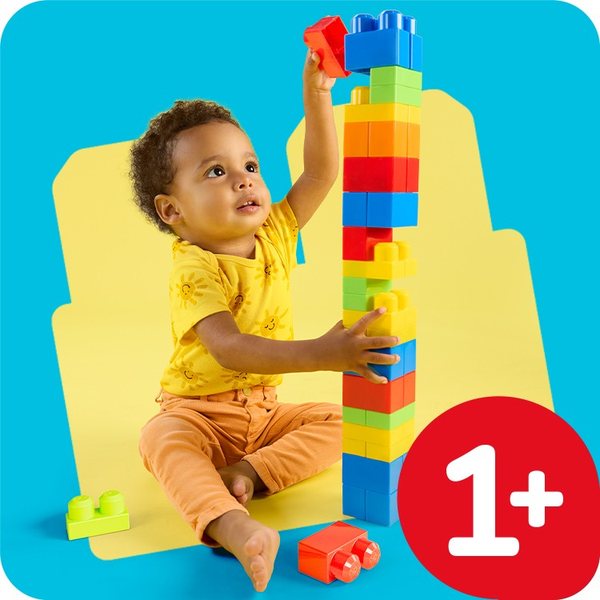
1+: grip, press, pull apart
At one, building is mostly un-building. A child picks up a block, bangs it, puts it on another, and pulls it off again. Our 1+ sets are designed around that: big shapes, generous studs and a fit that lets go without a fight.
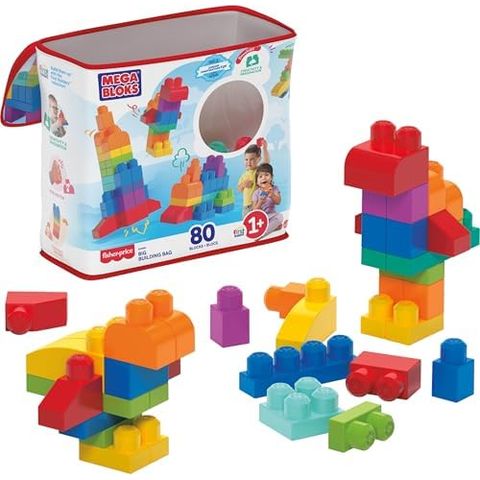
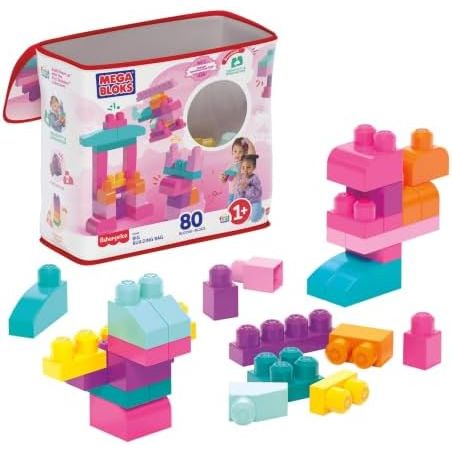
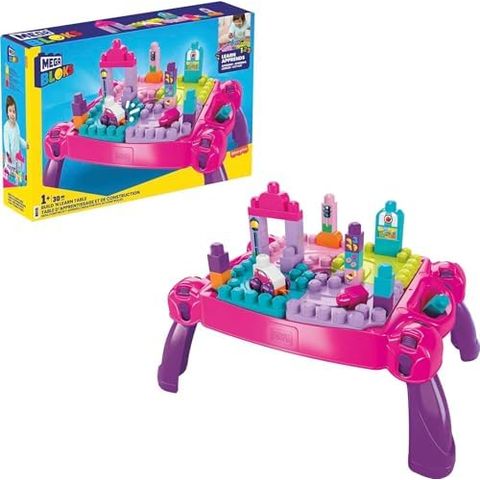
The Big Building Bag is the classic here. Block vehicles add a reason to move, and the Build 'n Learn table brings the blocks up to standing height.
1½+: blocks that say something
Around eighteen months the blocks start to carry meaning. The Build & Count Bus has the numbers one to ten; the Build & Match Animal Tractor splits farm animals across blocks so they can be mixed up.
Nobody needs to drill letters or numbers. Children load the bus and remix the animals, and the patterns sink in along the way.
3+: following the steps
The 3-in-1 sets introduce something new: a picture guide. Each box builds three models from the same blocks, and the step from the first model to the third is where children start inventing their own.
The blocks stay big, so the jump is in the thinking, not the fiddliness.
| Line | Age label | Set size | What sets it apart |
|---|---|---|---|
| Building bags | 1+ | 80 or 150 blocks | The open-ended base of any collection |
| Build 'n Learn tables | 1+ | Table + 29 pieces | Stand-up play, folding legs, storage inside |
| Block vehicles | 1+ | 5 to 23 blocks | Rolls, hauls and stores its own blocks |
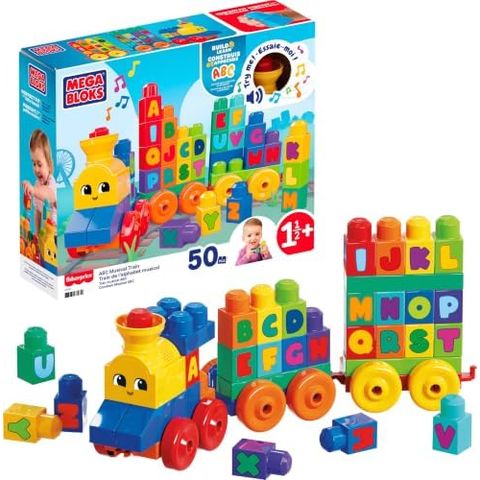
| Learning builds | 1+ to 1½+ | 30 to 60 pieces | Letters, numbers or animals on the blocks |
| 3-in-1 builds | 3+ | 25 or 26 blocks | Picture steps, three models per box |